
Let’s Talk About the Kid Kicking Your Seat on an Airplane
Updated: Jun 22
You're on an early flight to Boston. A kid behind you keeps kicking your seat. You were hoping for some focused work time in the air, but you’re completely distracted by the banging. You turn around to give the parent the side-eye. Everyone around you seems to be silently blaming her for not getting her kid under control.
In these situations, here’s what we can all agree on: First, the kicking needs to stop, and second, it's the parent's job to address the situation. But do the rest of us have a responsibility in this situation, too? I think we do.
We All Share Spaces
We all share spaces with other people. That means sometimes you'll get stuck behind someone at the grocery store counting exact change for long minutes. Sometimes a stranger will rear-end you at a stoplight. Sometimes the girl next to you on the bus is having a loud phone conversation fighting with her boyfriend. A guy at the hardware store might take a tumble into you while lifting mulch.
None of these people are purposefully annoying or inconveniencing you. They're just living their lives.
The same thing is true for kids. When a child is screaming, crying, or melting down in public, they're not out to ruin your day, they’re dealing with something they don't know how to handle.
The price of being engaged in a civil society is that these things happen. Sometimes people in your world will require something of you without asking. Sometimes living in community means you’re called into service and have to deal with things you’d rather not. And, as it often happens, this service comes at the worst time for you. Like on an early flight to Boston.
What the Child Actually Needs
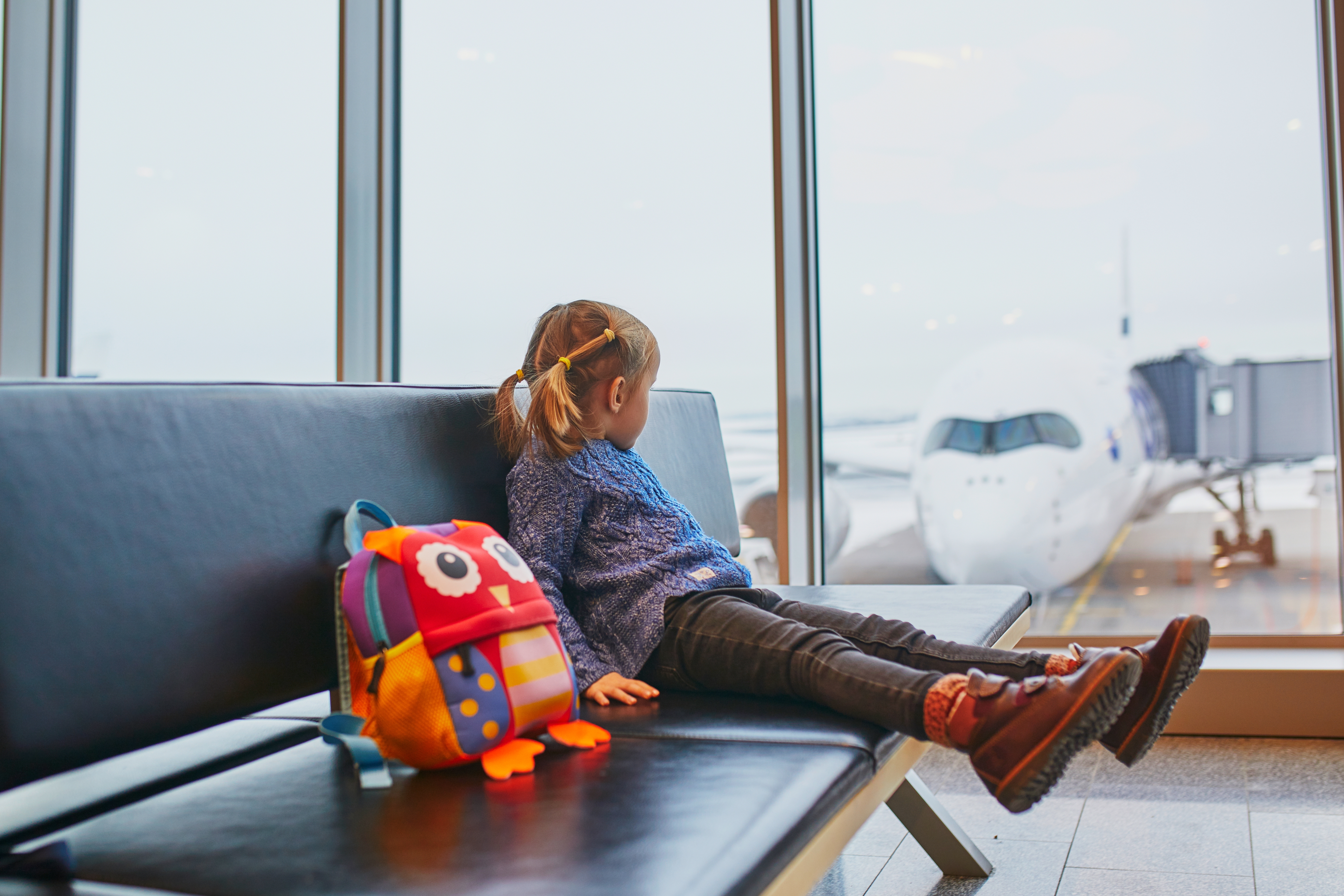
If that kicking child could talk to you like a grown-up, here's what they might say: "I'm overwhelmed right now. Everything is loud and new and my ears hurt. I can feel that my mom is worried about whether we'll be on time, and her stress is making me stressed too. My body doesn't know what to do with all of this, so I'm kicking. I'm not trying to be difficult."
But they can't say that. They're five. So they kick.
This isn't the parent failing. This is how kids work. (And the rest of us, too, but we’ve usually developed some skills for managing this stress by the time we’re adults.)
What's Happening in Their BraiN
In the same way we are not owed a road trip free of traffic, we are not owed a flight free from annoyances and inconveniences. The flight may be delayed, the guy beside you might snore, the woman next to you might interrupt you and talk your ear off, the temperature could be cold or hot, or whatever.
While we are generally able and even willing to tolerate those annoyances from adults, we are far less tolerant when confronted with a child’s “misbehavior”.
We blame the parent, we judge the parent, we scowl at the child. A video is running around social media this week of a guy who turned around and screamed full-out at a kid, and everyone around laughed. I’d suggest that we would never find it acceptable to treat a fellow adult passenger this way, even if they were flailing about. So why the difference?
Understanding How Kickers Think
First off, many of us are deeply triggered by a child fussing (whining, crying, kicking, etc.) Although it’s not universal (some people can tolerate a crying child without a lot of emotional response), for many of us, crying really grinds our gears. This has a lot to do with how people responded to us when we cried as children, and also how skilled we’ve become in managing our own emotions and reactions to things.
Second, we largely misunderstand the fussing. If we think a child cries because she’s a “bad kid”, we might also hold the old school view that a parent should simply punish the kicking kid and that will stop the kicking.
Travelers voice their opinion that a parent could “do something” so the kid will stop; if the kid is still crying, well, that must be bad parenting. We might think something like, “Good parents control their child and wouldn’t let them kick the seat.” Or “Good parents have kids who know how to listen and follow directions.”
Making it Make Sense
But here’s what we know about the neurobiology: During times of stress, both parents and children have a hard time doing what they know to be acceptable behavior. When kids get stressed or scared, their brain goes into "fight-or-flight mode."
In this mode, they can't think clearly or control their body well. They just react. The kicking, crying, or yelling isn't a choice, it's their body responding automatically to feeling unsafe. They’re simply not able to process a situation, determine what the context requires and then behave in a socially acceptable way.
Think about the last time you went to a work party and didn’t know anyone. Maybe you were anxious and didn’t present your ideas as clearly as you normally would. This is the work of the amygdala - the threat center of your brain. It tells the rest of you, “Hey, we’re probably not safe mingling during this cocktail hour, so shut down the thinking systems so we can get ready to run out of here.”
So knowing this, and given our strong desire to stop the kicking, how might be respond to the parent and child, instead of reacting in order to release our own frustration? Wouldn’t it be in our best interest to help make the situation calmer rather than escalating the tension with stares, heavy sighs, or counter-screams? Even for those of us adamant that it’s not our responsibility to “fix” the situation, we can make the annoyance go away faster with a little kindness. It’s biology.
What Actually Makes a Difference
I watched a woman on a recent flight do something different. Before the flight even took off, she turned around to a mom and said, “Let me know if you need anything during the flight. I know it can be hard traveling with kiddos!” This let the mom know her fellow passenger was an ally. That if things got hard, she wouldn’t judge.
Just knowing she had support helped keep the mom’s anxiety in check. When the child started fussing during take-off, the woman turned around, made eye contact with the child, and said, "Your ears hurt too?" The kid nodded. She smiled at the mom and stayed calm as she turned back to her laptop.
That was it. Nothing fancy. But the fussing stopped because the mom felt supported and the kid felt seen. He wasn't a problem to be managed. He was a kid struggling, and someone noticed.
Here's what real help looks like: a kind nod to the parent. Understanding that their kid is having a hard time, not being difficult. Being patient because you know that patience makes the situation better instead of worse. Even when it’s not your job. Even if you don’t have some particular kind of special skill. Regardless of whether you’re really upset yourself. Sometimes the biggest thing you can do is offer compassion.
We All Have a Role
If you want to learn real skills for supporting people going through hard moments without making it worse, we offer training for anyone who wants to show up differently. Learn how to make your summer travels a bit less stressful for everyone.


Comments