
What to Do When You See a Parent Letting Their Child Struggle (On Purpose)
You know that moment in line when you can feel everyone around you collectively deciding to be annoyed? This is about one of those. And about what’s actually happening on the other side of the counter, especially when it comes to teaching kids independence.
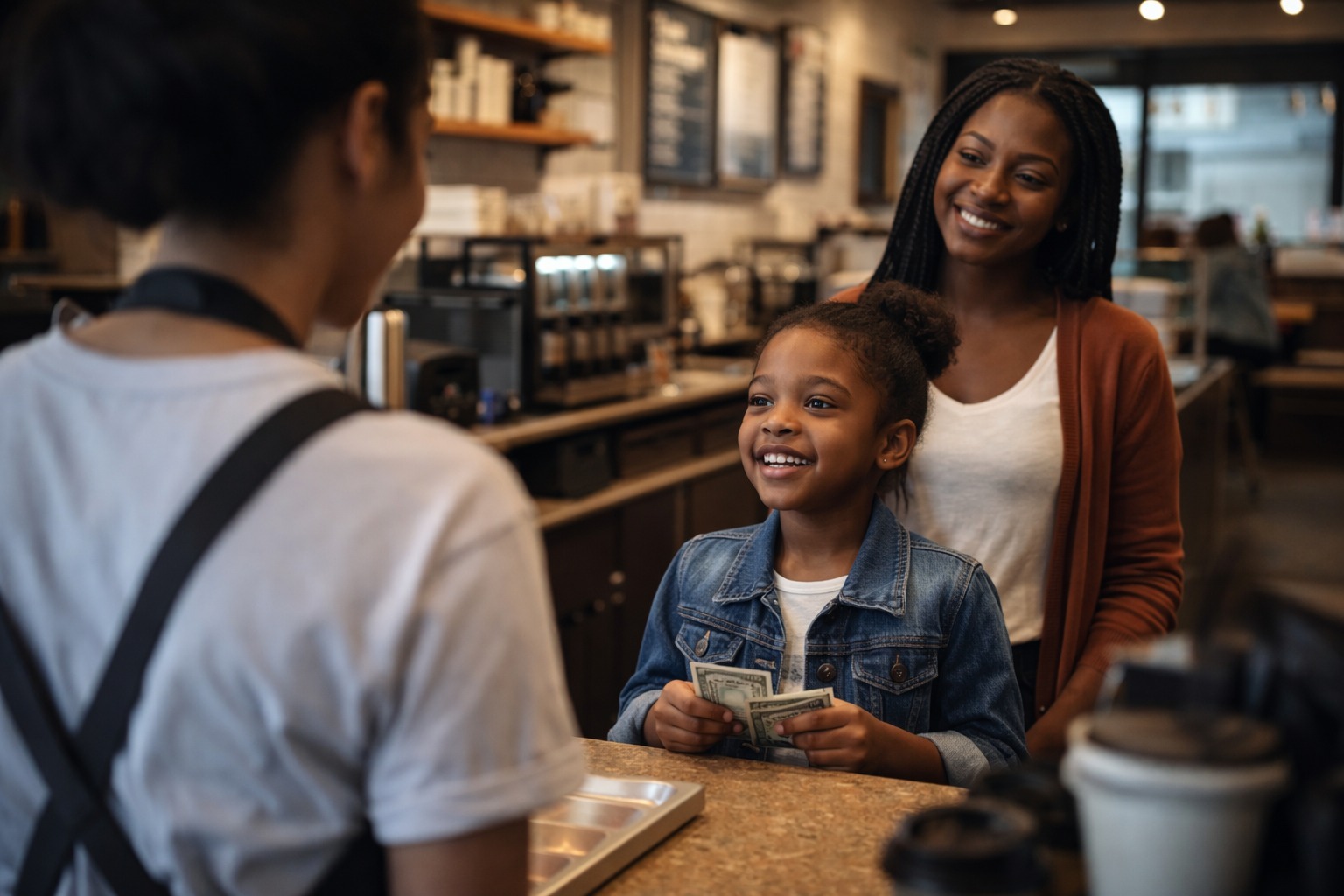
"Um... can I have a... um... a hot chocolate? With... um," The barista waits. The parent stands three feet back, deliberately not jumping in. The line behind them is growing, someone sighs, and another person checks their phone with obvious impatience.
The kid finally gets through the order, counts out her money, and gets the change wrong. The parent gently corrects her, and she tries again.
The whole transaction takes maybe two minutes. It feels like twenty. And every adult nearby is thinking the same thing: Just order for her already.
But here's what's actually happening: That parent is teaching their child how to exist in the world. And it's one of the hardest things a parent can do, especially when strangers are watching and judging every second of the struggle, because teaching kids independence rarely looks smooth in real time.
The Shift That's Happening
Something’s changing in how people think about raising kids. For years, the focus was on making everything smooth for children, removing obstacles, and making sure they never struggled or felt uncomfortable.
Now there’s a shift toward teaching kids independence and how to handle the bumps themselves. And that means letting them struggle in real time, in public, while they learn.
Parents are letting kids order their own food, carry their own bags, count their own money, ask strangers for help, and make mistakes and figure out how to fix them.
It looks messy and slow, and it makes other adults incredibly uncomfortable.
But it’s not neglect. It’s teaching, and there’s a huge difference.
What Struggle Actually Builds
When a child tries to do something hard, and you don't immediately rescue them, their brain is building something important: frustration tolerance.
They learn that discomfort doesn’t equal danger, that struggling for a minute doesn’t mean they’re failing, that they can figure things out even when it’s awkward or hard.
If a parent always steps in the moment things get difficult, the child never builds that capacity. They learn that struggle means something's wrong and someone needs to fix it for them.
But when the parent stays back and lets the child work through it, even when it's uncomfortable to watch, the child's brain learns: "I can handle this. It's hard, but I can do it," which is a core part of teaching kids independence.
That skill, that confidence, doesn't come from success. It comes from struggling and discovering you can survive it.
When Bystanders can Make it Harder
Here's what usually happens when a child is learning something in public and taking longer than adults expect.
People sigh, make comments, offer to help in ways that take over instead of support, and give the parent looks that say, “This is taking too long” or “Just do it for them.”
And every one of those signals makes it harder for the parent to hold back and let the child learn.
Because the parent is already fighting their own instinct to jump in and make it smoother. Watching your child struggle is physiologically stressful. Your body wants to fix it, to rescue them, to make the discomfort stop. That’s the way parents are built.
Staying back and coaching instead of rescuing takes enormous self-control. And when other adults are visibly annoyed, that pressure to just take over becomes almost impossible to resist, even when the goal is teaching kids independence.
What I've Seen Work When Teaching Kids Independence
I was behind a family at a grocery store checkout. The mom was letting her son, maybe seven, handle the transaction. He was counting bills, dropping coins, losing track of what he was doing.
The cashier was patient. The person behind me was not, with heavy sighs, eye rolls, and a loud “Some of us have places to be.”
I caught the mom’s eye and smiled. Not a “your kid is so cute” smile but a “you’re doing something hard, and I see it” smile.
She looked so relieved she almost teared up.
When the kid finally finished, and they walked away, the impatient person muttered something about how parents these days don't care about other people's time.
And Then, the Life Lesson
But here's the thing: that mom cared deeply. She was teaching her kid a life skill that will serve him forever, and moments like this are exactly what teaching kids independence looks like in practice. And she was doing it while managing her own stress and everyone else's judgment.
Supporting that doesn't mean you have to be thrilled about the wait. It just means you don't add pressure to an already hard moment.
Sometimes I'll make a casual comment to ease the tension. "I always lose track when I'm counting change, too." Or just stay calm and patient in line, modeling for the kid that it's okay to take your time.
(I once watched a kid try to order at a fast-food counter and completely freeze up. The parent coached from the side: "Take a breath. Start with what drink you want." A guy behind them made a loud comment about how this wasn't the place for parenting lessons. The kid got more flustered. I stepped forward and told the kid, "I forget what I want to order all the time. You're doing great." Small thing. But it helped.)
The Difference Between Struggle and Distress
Not every struggling child needs to be left to figure it out. There's a difference between productive struggle and distress.
Productive struggle looks like effort and frustration and trying again, staying engaged even when it’s hard. Distress looks like shutdown, panic, complete overwhelm, a kid who’s no longer trying and is asking for help.
Parents who are teaching real-life skills know the difference. They're not leaving their kids in distress. They're allowing productive struggle while staying close enough to step in if needed, which is essential when teaching kids independence responsibly.
If you see a child genuinely overwhelmed and the parent not responding, that's different. But most of the time, what you're seeing is a parent holding space for their child to learn. And that deserves support, not judgment.
The Cultural Shift We Need When Teaching Kids Independence
We live in a culture that values speed and efficiency, getting through the line, not holding people up, keeping things moving.
But teaching kids to be competent in the world requires slowing down, making space for mistakes, and some collective patience, all of which are central to teaching kids independence.
When communities can hold that space, it gets easier for parents to teach these skills. When every public interaction becomes a race, parents feel pressured to just do everything for their kids to avoid judgment.
The kid at the coffee shop eventually got her hot chocolate. She held the cup with both hands and walked carefully back to the table where her dad was waiting. He didn’t make a big deal out of it. She did it, so she just sat down and took a sip.
Want to get better at supporting in these moments? Our bystander support training teaches practical ways to offer patience instead of pressure.


Comments