
Bystander Support: What I Almost Said to a Dad in Brooklyn
Updated: Sep 23
You know that moment when you can hear a parent coming apart two tables over, and some part of you starts drafting the speech you're never actually going to give? I was in Brooklyn last week, picking up pizzas at the little shop around the corner from where we were staying, and that was my whole evening for about ten minutes. I study bystander support for a living, which you'd think would help. Hold that thought.
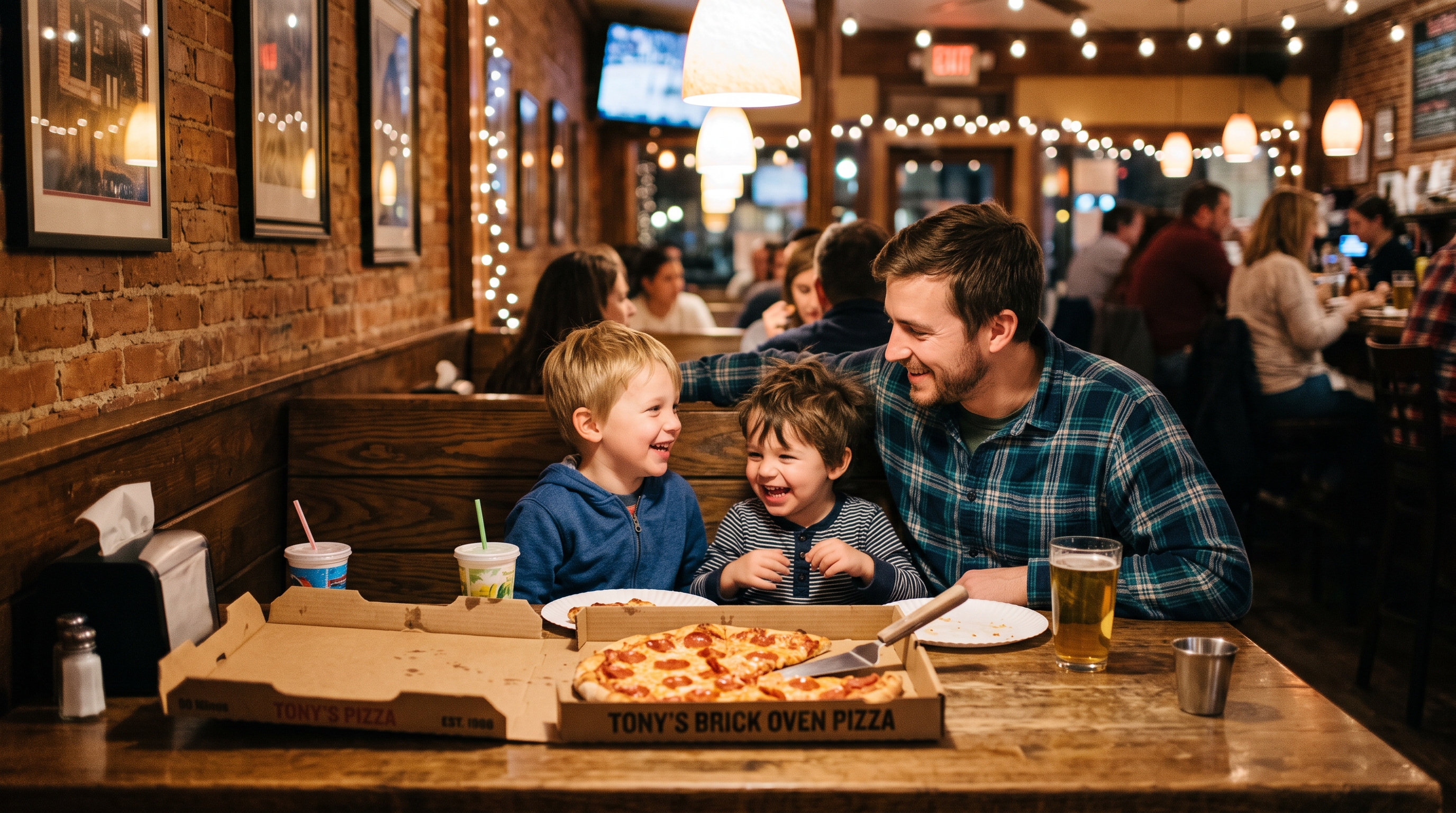
The place was packed. Saturday night, kids everywhere, noise bouncing off the walls. Two little boys, maybe three and four, were wiggling in their chairs and not eating their pizza. Their dad kept getting louder. "Sit down, you are being so bad." "Do you see any other kids acting like this?" "Don't touch that!” “I said sit down." “Can you please take just one bite?”
Here's the thing. Those boys were smiling. They weren't bothering anybody, and they weren't doing anything except being small kids in a loud room at the end of a long day. But their dad was at the end of his rope, and every time they moved, it pulled tighter.
What I wanted to do
I want to be honest about this part. What my brain first wanted to do was walk over and say, "Geez, dad, get it together. These are little kids and you're making a huge deal out of nothing. You're the one making a scene here. If you keep this up, your kids aren't going to like you very much when they're older."
I've studied this moment long enough to know that that wouldn't make me feel better, nor would taking out my phone and recording them, or reporting them to the manager (although I did record a few notes on my phone after they left so I could remember the story details.) Most importantly, none of these things would have helped the kids or the dad.
Then we would have had two (or more!) worked-up adults in a pizza shop instead of one, and those boys would have watched a snotty stranger take their dad apart in public. To what end?
Yes, this is counterintuitive
Every part of you wants to say something to fix the situation, because let’s be real here, it can be very triggering for us to hear all the fuss. And somehow it feels like a good lecture will get the dad to really understand the situation and to stop being so uptight with his kids.
However, calling out his parenting will likely make him feel worse, and it won’t help you feel any better either. He likely knows, but his nervous system has hijacked the rational part of his brain.
I think about it this way: Those boys have that dad for the rest of their lives, and the three of them will be working things out along the way, in rooms I'll never be in as part of bystander support. Somewhere along the way, the dad might start to think about why those situations upset him so much, and how he can practice resetting when the moment pushes him passed his limits. But that time isn’t now.
So you set aside the little speech and see what you might be able to do to lower his parenting stress - the one thing you can help with a bit. No, you don't get a monologue moment, and yes, you might walk out still feeling a particular way about the hard stretches ahead for that dad and those kids. But isn't that true of all of us? I have absolutely been there with my own kids.
Why bystander support starts with your own body
My jaw was tight being in that space with a yelling dad. That's not a small detail, because when you're revved up, the thinking part of your brain steps back and the reacting part takes the wheel. It happens to kids in restaurants and it happens to adults watching them.
That dad was already there. If I'd walked over hot, I would have been meeting him in the exact same state, and nothing useful comes out of that. So I stayed in my chair and let my breathing slow down. I started thinking about what the week might have looked like for him, what he might be carrying that had nothing to do with pizza. Money, a job, a sick parent, three hours of sleep. I have no idea. That's sort of the point.
Then his wife came back to the table. She was completely relaxed with those boys, and I was honestly impressed at how steady she stayed while everything around her stayed loud.
What actually happened
My order came up. I walked past their table and started to say something kind, and he got there first.
"I'm so sorry. It's just a stressful time."
I told him no worries. "This is hard. This is the hardest job there is. You got this. We believe in you." And I smiled and patted him on the back as I walked past their booth.
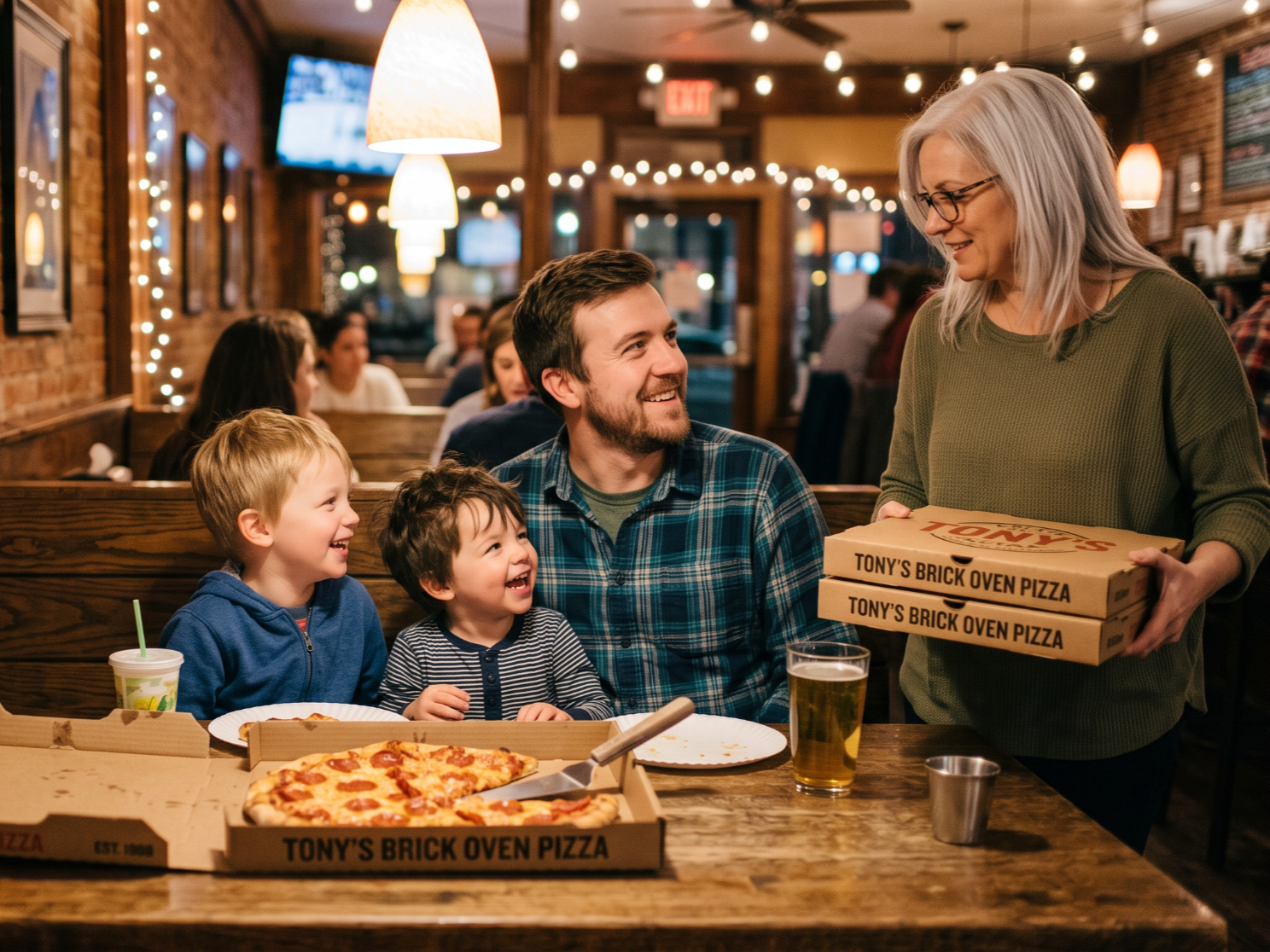
He smiled and shook his head, the way people do when someone catches them at their worst and is nice about it anyway. His wife looked at him and said, "See?" And she smiled too.
That was it. That’s bystander support: no lesson, no speech, nobody fixed.
Nobody told parents this part
I think a lot of parents believe their job in public is to control their kids. Not to keep them safe or stay connected to them, but to manage them into looking like the kind of children who make strangers nod approvingly.
It's a job nobody can do, and the harder you try, the worse it goes. Little kids wiggle. They touch things. They get loud in loud rooms. A parent who's trying to control that in front of an audience ends up fighting their own children on behalf of people they'll never see again.
That dad wasn't a bad father. He was a tired one who thought everybody in that shop was grading him. And the fastest way to hand him a little relief was to be one person in the room who clearly wasn't.
Bystander support usually looks smaller than people expect. It's not stepping in to fix a family. Most of the time it's a few words that tell a parent the room isn't against them, or letting somebody go ahead of you in line, or a nod that says you've been there. I got my pizzas and headed out. The boys were still wiggling. Their dad and mom were talking about what came next that evening as they gathered up their things.
If you want to get better at this, and specifically at the part where you don't say the speech, our bystander training walks through what actually helps families in hard public moments.


Comments