
“I Want to Help!” Why Messy Cookies Matter More Than Perfect Cookies
I was baking cookies one afternoon in December when a little hand appeared beside the mixing bowl. My son pulled a chair to the counter and climbed up with the confidence of someone who had already decided they were part of the process. The sprinkles were the first thing he reached for. Of course. Moments like this often highlight how naturally children want to be involved in everyday tasks.
We had a full list of things to finish that day. Cookies for a party. Decorations still in their boxes. A kitchen already too warm. The clock was not on our side. But the chair stayed where it was, and so did my child. “Me do it!” rarely arrives at a convenient moment, especially during busy seasons.
Why Kids Want to Be Part of the Work
Children pay close attention to the things adults do with care. Baking, hanging ornaments and wrapping gifts. These tasks look like connection to them. They look like belonging. Involving children in these things reassures a child that they matter in the rhythm of family life.
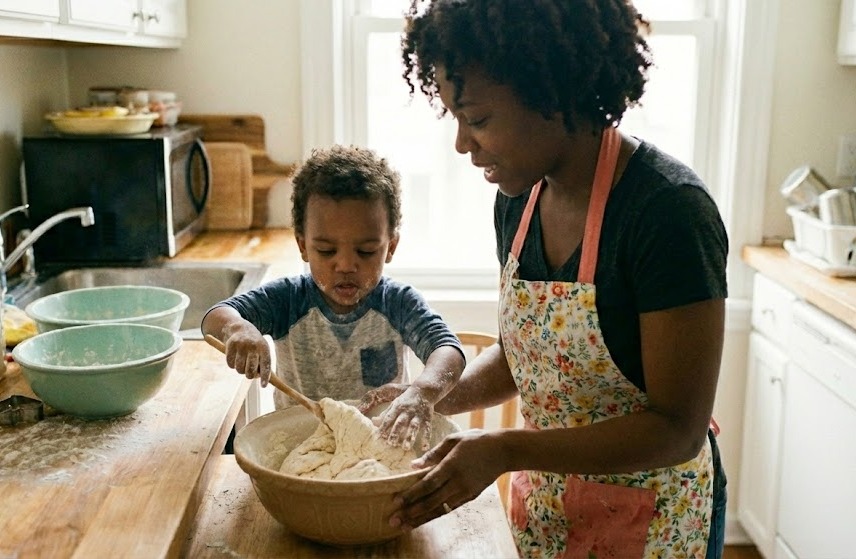
Kids are not drawn to perfection. They are drawn to participation and experience. They want to hold the spoon, even if it means flour spills over the edge. They want to hang the ornaments, even if half of them end up on the same branch.
Their bodies learn through touch, their confidence grows through involvement, and their relationship with the adult deepens when they feel included. Working side-by-side with a caregiver gives children a sense of ownership that cannot be replaced by a perfectly frosted cookie.
Why This Feels Hard for Adults and How Parental Involvement Solves It
Adults often carry an invisible script during the holidays.
Make it beautiful! Make it efficient! Make it look effortless!
That script can take over without anyone noticing. The pressure to keep things tidy or on schedule can make a parent tighten their voice or correct a child’s every move. Not because the child is doing anything wrong, but because the moment feels bigger than it is. Inviting your child to truly participate with all of their childlike ways can feel risky when adults fear losing control of the outcome.
Children sense that shift immediately. Their shoulders go up. and their breath gets shallow. They start to question what they’re doing and they stop taking risks. All because the adult feels rushed by an expectation that was never the child’s responsibility. When parental involvement turns into correction, connection often slips away.
How Parental Involvement Builds Regulation
When a parent slows the pace and lets the child stir, pour, or hang something crooked, it does more than create a memory. It regulates the space. The adult’s calm presence becomes the cue the child follows. The child learns that shared tasks are not about pressure. They are about time together. And they are so proud of their creations! After all, the only thing a child learns when the adults take over, is that adults are really good at decorating. What would it feel like to laugh at the spilled flour and sing a song together as you swept it up?
There is connection woven into everyday activities. No big lessons or lectures, just a steady adult inviting a child to participate in the work and being okay letting go of expectations. Some of the best times together are when it feels ordinary and messy and not instructional.
The Moment That Stays with Them
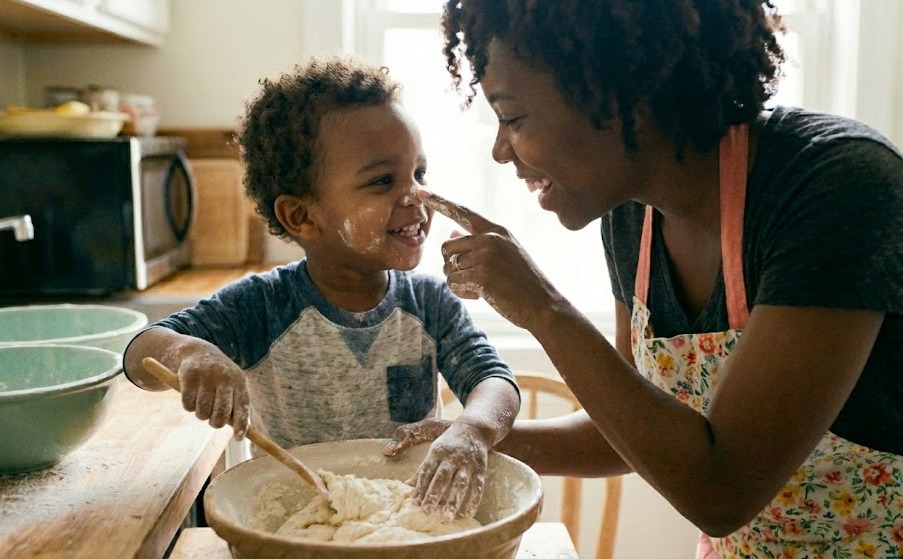
In the kitchen, my son pressed cookie dough into uneven shapes and covered one with far more sprinkles than any recipe would call for. He looked proud. And I was so proud of myself, too, for letting it be that way.
The kitchen was a mess.
The clock kept moving.
None of that mattered as much as the way he watched my face to know there was room for him in the moment.
A Reflection to Carry into the Season
Children do not remember perfect cookies or balanced ornaments (and frankly, neither do your neighbors or your mother-in-law!) They remember when someone invited them to take part. They remember when their effort mattered and the warm fuzzies of being included instead of rushed. Doing things together, however imperfectly, becomes the memory that lingers long after the holidays pass.
When kids step into a holiday task, they are not slowing us down on purpose and they don’t mean to mess up your pretty patterns. They are moving toward us and practicing how they can be like us. And that is the part worth protecting.


Comments