
What to Do When You See a Parent Refusing to Hand Over the Phone (And Why That's Actually Hard)
You know that moment when a kid is losing it in a restaurant and the parent isn’t handing over a screen, and you can feel the whole room deciding whose fault it is? That’s the one I want to talk about, especially in the context of phone-free parenting. The family at the next table is waiting for their food. The kid is restless, drumming on the table, asking when the food will come, sliding under the booth, and popping back up.
The mom pulls out crayons. The kid ignores them. Whines louder. "Can I have your phone? Please? Everyone else gets a phone."
The mom says no. The kid melts down. And you watch three other diners roll their eyes like this parent is torturing their child by not handing over a screen.
Welcome to 2026, where trying to raise kids without constant screens has somehow become the controversial parenting choice, often labeled as phone-free parenting.
Why Phone-Free Parenting Looks Harder in Public
Here's what's happening: A growing number of parents are pushing back on early smartphones and constant screen time. They're reading books like The Anxious Generation and making different choices about technology, choosing phone-free parenting more intentionally.
At home, this might look like board games instead of tablets, books instead of YouTube, boredom instead of instant entertainment.
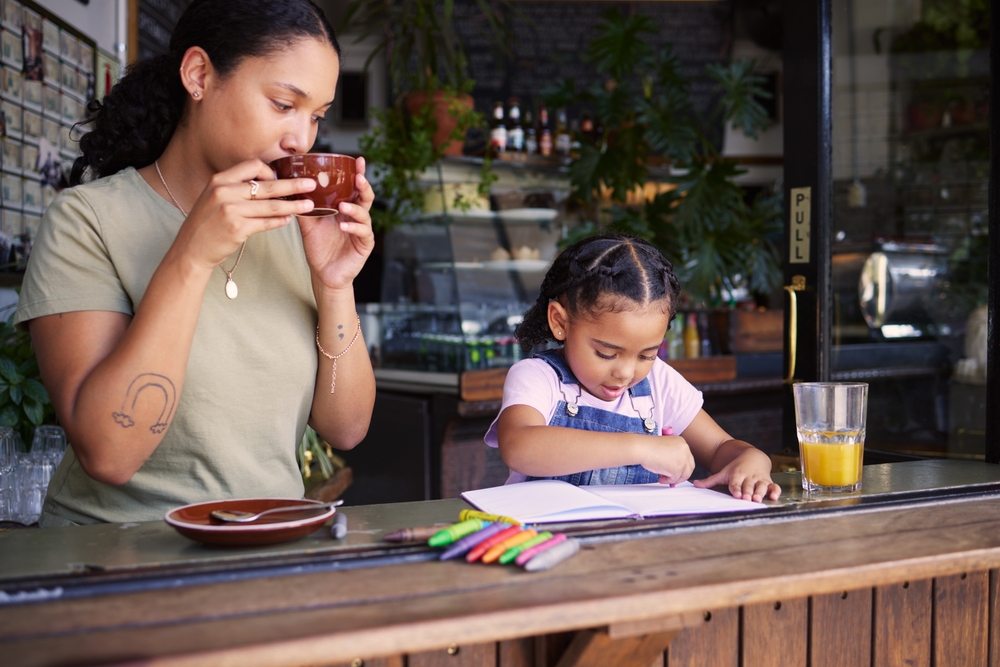
But in public? In restaurants, waiting rooms, airports, and doctors' offices? It looks like chaos. Because kids who aren't used to being instantly entertained have to learn how to wait. And learning is loud, especially in phone-free parenting environments.
The parent sitting across from the restless kid isn't being mean. They're doing something that's actually hard: letting their child be bored in a world that expects all children to be quietly plugged in.
And when other adults sigh or glare or make comments, they're not just judging the parent. They're making that choice harder to sustain, especially for families practicing phone-free parenting.
What Boredom Actually Does for Kids (And Why It Matters)
This might sound wild, but boredom is actually good for children's brains, which is a key idea behind phone-free parenting.
When kids have to sit with nothing to do, their brains start making their own entertainment. They notice things, daydream, and figure out how to regulate their own energy without an external device doing it for them.
It’s uncomfortable to watch. The kid squirms and complains and tests every boundary. But that discomfort is part of the process.
A kid who learns to handle boredom at age six has a much easier time handling frustration, delayed gratification, and self-regulation at sixteen. A kid who gets a screen every time they're understimulated never builds that capacity.
The parent saying no to the phone isn't being cruel. They're building their child's nervous system resilience. It just doesn't look like that from the outside, especially in moments of phone-free parenting.
The Restaurant Standoff: What Bystanders Can Actually Do
So you’re sitting near the family. The kid is getting louder, the parent is still holding firm, and every diner nearby has an opinion about it.
The most useful thing you can do is catch the parent’s eye and give them a real look. Not a “your kid is so cute” look, but an “I see you doing something hard, and I respect it” look.
If the moment allows, say something quietly when the kid isn’t listening: “Good for you. That’s not easy.” That one moment of being seen can help a parent stay the course when everyone else is making them feel like they’re failing at phone-free parenting.
Sometimes I’ll just talk to the kid if I’m genuinely okay doing it. “What grade are you in? What’s your favorite subject? Have you read any good books lately?” You’re not entertaining them, just showing them that human conversation exists.
Sometimes that’s enough to shift the energy. If other diners are getting visibly annoyed, a casual comment helps too. “Food’s taking forever tonight, huh? I’m getting restless too.” It acknowledges the wait is real without making the kid feel like the problem.
(I once watched a dad refuse to give his kid a phone during a 45-minute wait at a restaurant. The kid was losing it. I happened to have a newspaper in my bag and asked if the kid wanted to look at it. The kid spent 20 minutes making up stories based on the pictures. The dad looked like he might cry from relief. I got my paper back with crayon marks and zero regrets.)
When Everyone Else Is Doing Phone-Free Parenting
The hardest part of phone-free parenting isn't the child. It's the social pressure.
When every other kid at the table has a device, the one kid without one feels punished. When every other parent in the waiting room hands over a screen, the parent refusing looks unreasonable.
Bystanders have more power here than they realize.
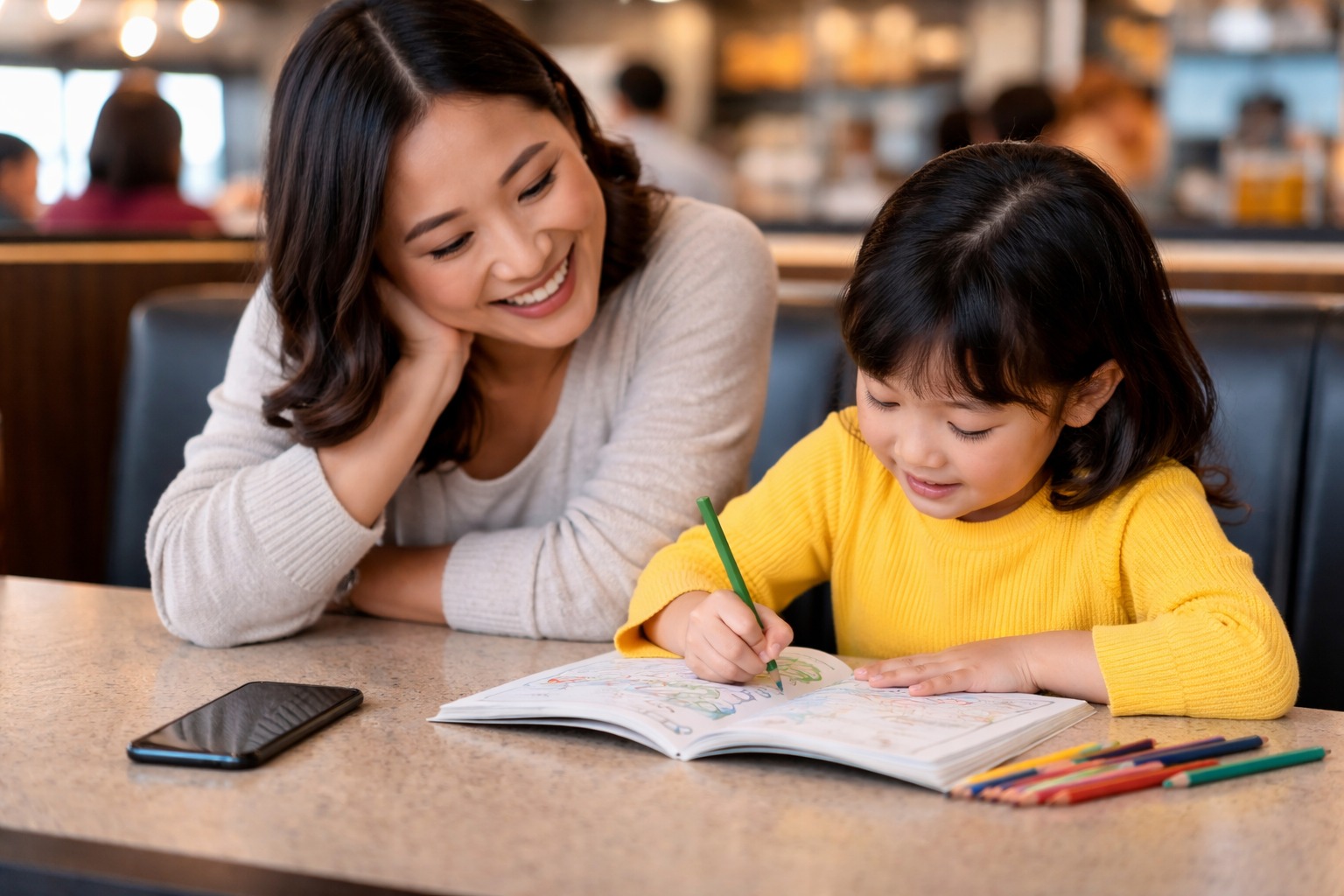
If you're in a public space and you see a parent trying to navigate boredom without screens, you can normalize it just by not acting like it's a problem, especially when you recognize phone-free parenting in action.
It’s best not to sigh when the kid gets loud, or make comments about “kids these days,” and not to pull out your phone and show the kid a video to “help.” Just exist calmly near the chaos. Show the parent and the child that boredom in public is normal and survivable.
That quiet support matters more than you think.
What About the Really Loud Kid?
Look, not every restless kid is just bored. Some kids have sensory needs. Some are neurodivergent. Some are dealing with big feelings that have nothing to do with screens.
The phone-free parenting movement doesn't mean every child should be able to sit still in every situation. It just means screens don’t need to be the automatic first response to discomfort.
If you see a parent who looks genuinely overwhelmed, offer actual help. “Can I help you get to your car?” Or ask the server to box their food. Sometimes the kindest thing is helping a family exit with dignity, not making them feel like they have to perform calm they don’t have.
The Culture Shift Happening Right Now
More parents are choosing to delay smartphones, more families are going screen-free at meals, and more kids are showing up to public spaces without tablets, all part of the broader shift toward phone-free parenting.
This is going to look messy for a while. It’s going to be loud and uncomfortable and probably annoying if you’re in a hurry.
But if enough bystanders decide to support it instead of shaming it, we change what’s normal. We show kids and parents alike that choosing differently doesn’t mean doing it alone, and that patience is still a value worth keeping.
The family at the restaurant eventually got their food. The kid ate three bites and wanted to leave, and the mom, exhausted, stayed firm on the no-phone boundary anyway.
As they left, I caught her eye and smiled. She smiled back, tired but steady.
That small moment of being seen by another adult who wasn’t judging her? I think about it more than she probably does.
Want to learn more about supporting families making different choices in public spaces? Our bystander support training program teaches practical ways to offer compassion without adding pressure.


Comments